When I think about Easter hosting, I don’t think about perfection. I think about energy. About voices overlapping, people leaning in, laughter spilling across the table, and that feeling when everyone forgets the time because the conversation is too good to leave.
That’s what I want my Easter table to hold space for.
For me, an Easter tablescape isn’t about matching sets or following rules. It’s about creating a table that feels alive, welcoming, and full of warmth — one that invites people to settle in, stay longer, and feel completely at home.
1. Start With Purpose: What Happens at Your Table?
Whenever I refresh a space — especially a dining room — I always start by asking one simple question:
What actually happens here?
In our home, the dining table is where people talk the most. Where stories get shared, where jokes land, where energy builds. So I want the table to reflect that.
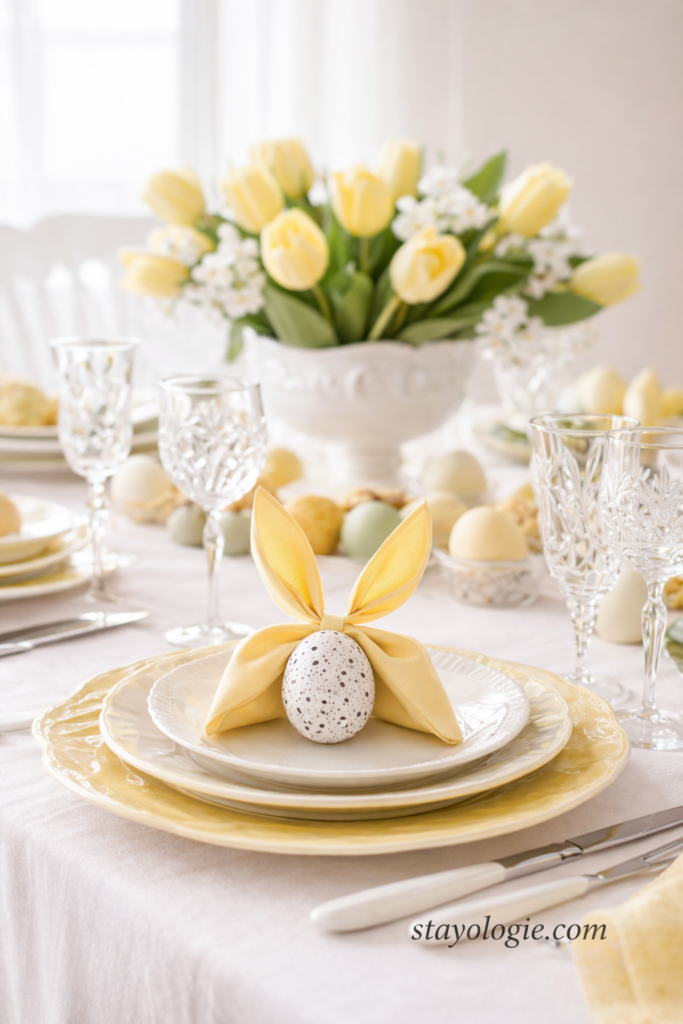
That’s why I love color, especially for Easter. Color sets the tone before anyone even sits down. Yellow, in particular, feels joyful and energetic to me — it signals optimism, excitement, and lively conversation. It’s the perfect backdrop for a spring gathering where everything feels like it’s waking up again.
2. The Tablecloth Is the Starting Point
The tablecloth is always my beginning.
Sometimes it’s soft and neutral. Other times it’s bold — red, pink, or electric yellow. Whatever I choose becomes the anchor for everything else. Once the tablecloth is down, the rest doesn’t feel overwhelming. It gives me a base to work from, instead of styling piece by piece with no direction.
For Easter, I love something energetic. It immediately sets the mood and makes the table feel celebratory before anything else is added.
3. Mixing Plates, Not Matching Sets
I’ve never cared much about everything looking the same. In fact, I love when it doesn’t.
My Easter table is always a mix:
- old favorite plates
- vintage finds
- newer pieces collected over time
Some spell spring, some hint at summer, and some just make me smile. There’s often a color thread running through them — green, yellow, or something fresh — but it’s never planned. It’s only once everything is laid out that I realize it all somehow works together.
That’s the beauty of mixing. It feels relaxed, personal, and real.
4. A Few Hosting Shortcuts I Always Use
Hosting doesn’t need to be complicated to feel special.
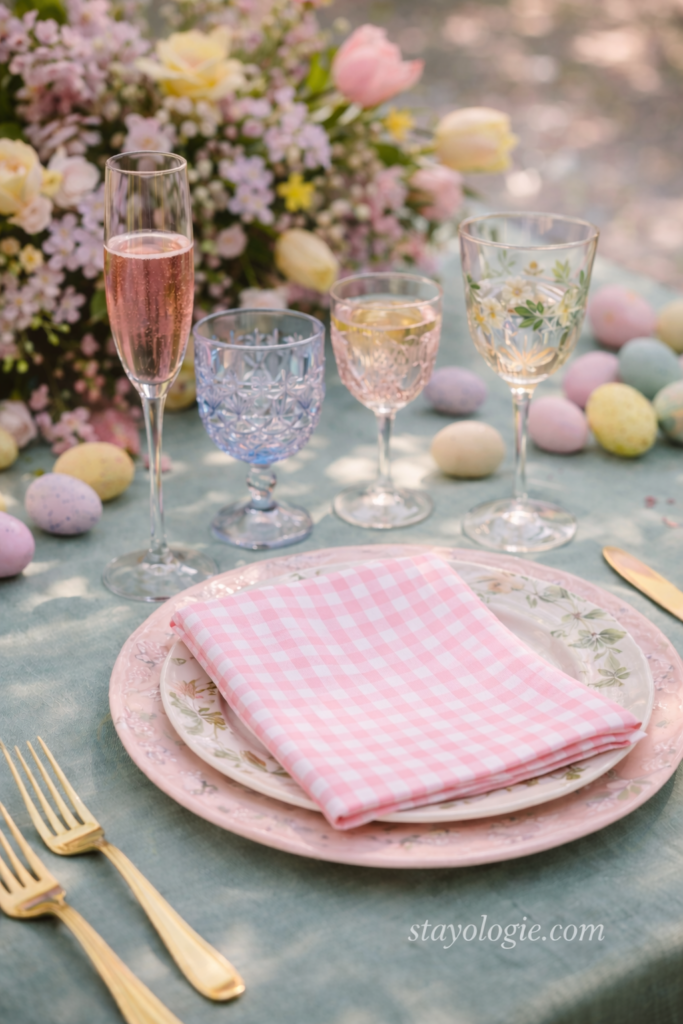
I often use printed dinner napkins and tea towels as napkins — they’re practical, unfussy, and easy. I’ll grab plates straight off the wall or shelves if they fit the mood. And because life happens (especially with kids), I’m not precious about things breaking or being perfectly placed.
I don’t buy full sets. I add slowly — two plates here, one napkin holder there. Over time, the collection grows naturally, and the table starts to tell a story.
5. Glassware, High and Low
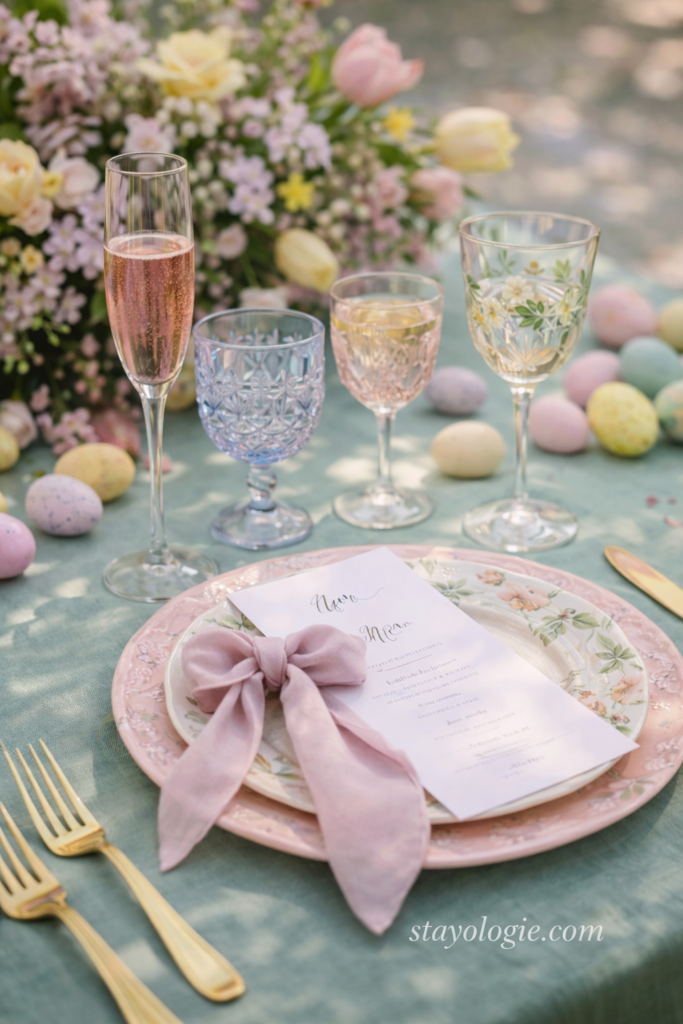
I love mixing glasses just as much as plates.
Some are simple and everyday. Some are hand-painted or feel a little special. Together, they create interest without trying too hard. I think everything on the table should feel like a feast for the eyes, not just something functional.
It’s that high-low mix that keeps the table from feeling staged.
6. Bringing Spring to the Table
When it comes to decorating, I almost always turn to nature first.
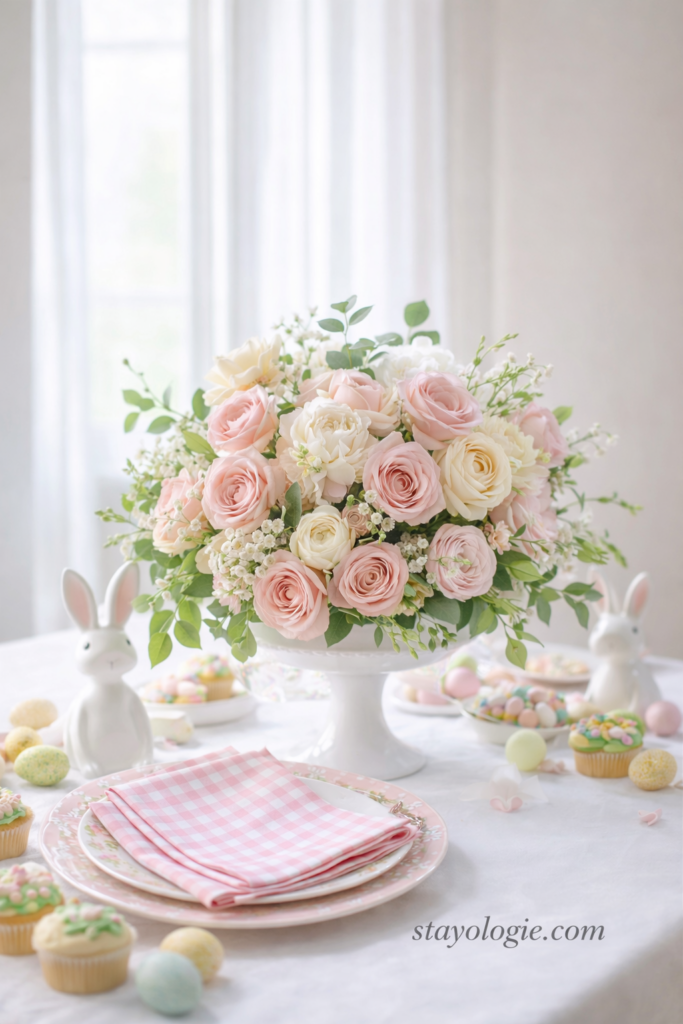
Anything from the garden can go straight onto the table — branches, greenery, or twigs. It instantly brings life and movement. Easter is such a hopeful season, and natural elements capture that better than anything else.
I also love bringing out little treasures collected over the years — vintage eggs, hand-painted pieces, and small objects that only appear once a year. They don’t need to match. They just need to feel joyful.
7. Memory Makes the Table Meaningful
Some of my favorite Easter table details are the most sentimental ones.
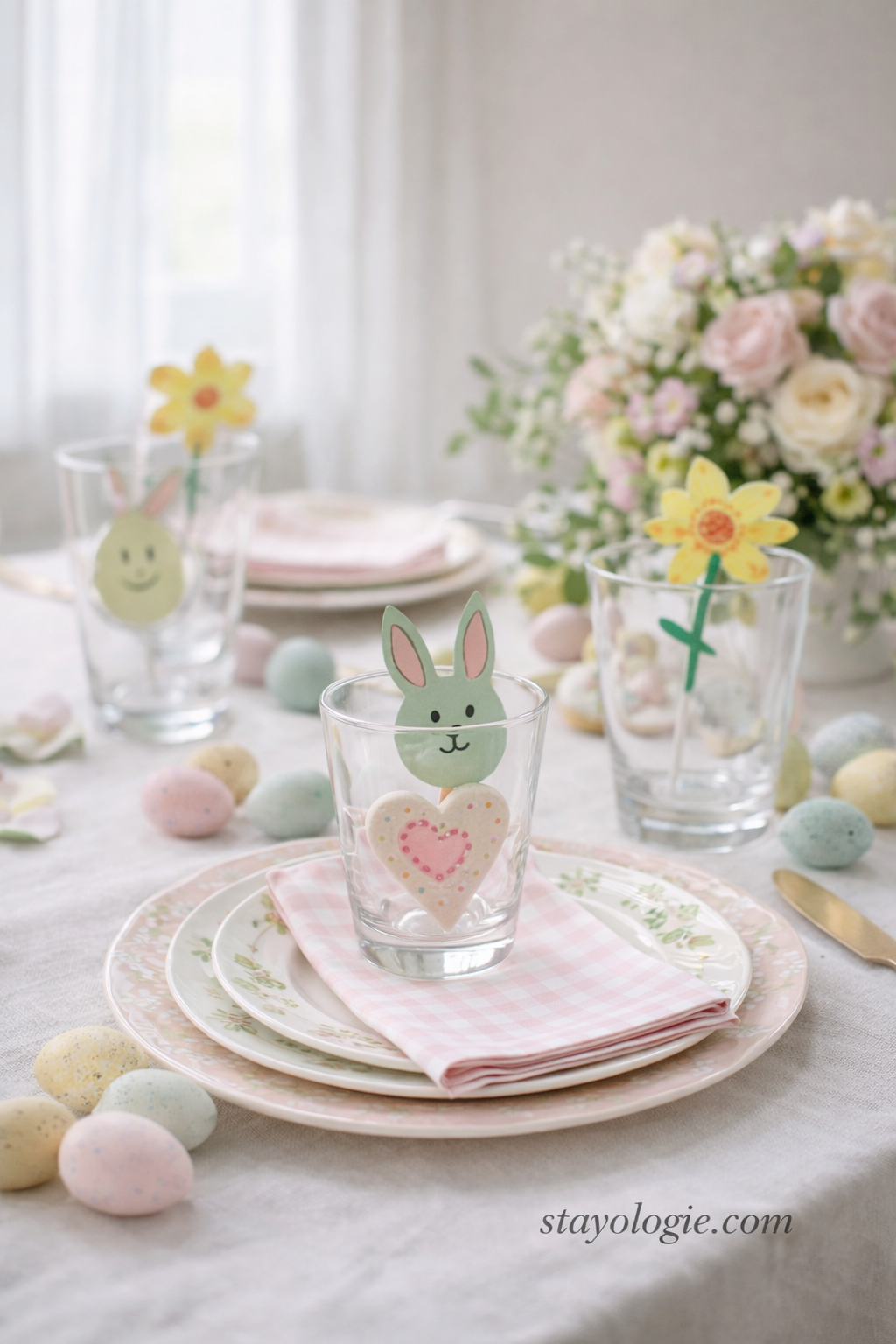
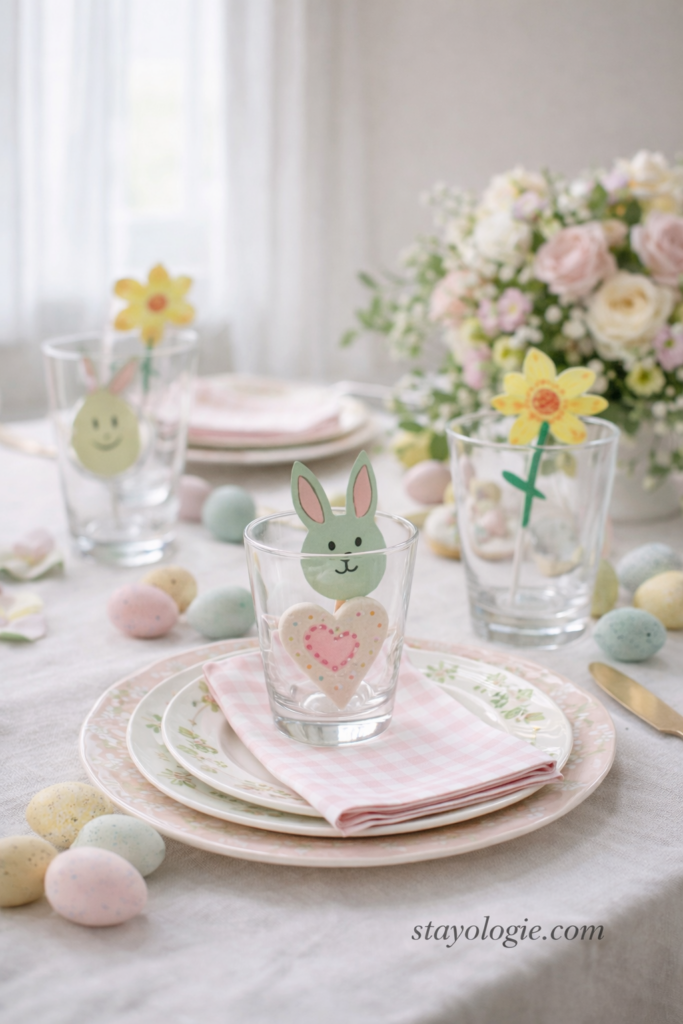
I keep small handmade items my children made over the years, and every Easter, they come out again. Children are far more sentimental than we give them credit for — they love seeing familiar things return.
I often use these pieces as place markers, popping them into glasses so everyone knows where they’re sitting. It’s simple, personal, and sparks conversation before the meal even begins.
8. Flowers, Faux, and the Easter Tree
Arranging flowers is my favorite part of the process.
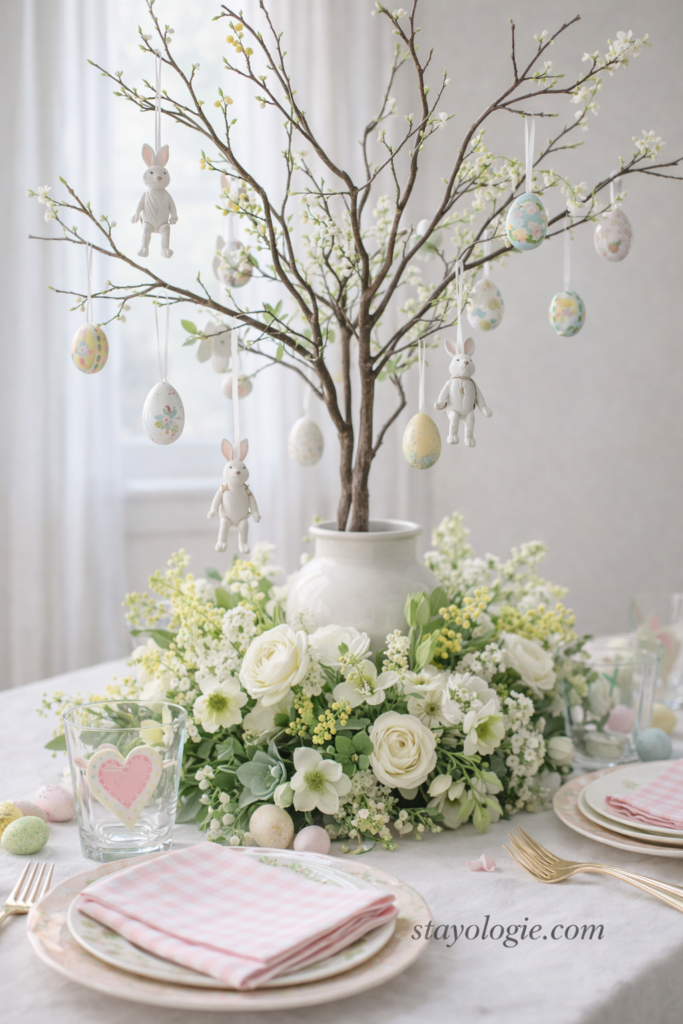
I love mixing real and faux flowers without apology. When the fresh blooms fade, the faux ones stay — especially mimosa, which I adore. For Easter, I tend to stick with green and white flowers. They feel fresh, calm, and hopeful, and they balance out a colorful table beautifully.
One of my favorite traditions is creating what I call an Easter tree — tall branches arranged in a vase, decorated with small articulated rabbits or hand-painted ornaments. The height brings drama and movement, while the flowers around the base add softness and depth.
It feels playful, a little magical, and very Easter.
9. Small Details That Invite Anticipation
I love making simple menu cards. There’s something special about guests seeing what’s coming — the anticipation, then the realization.
I often reuse old cards, cutting off the message and writing the menu on the back. It’s an easy way to make something meaningful without buying anything new, and guests often take them home as keepsakes.
What I Hope Guests Take Away
My favorite part of hosting isn’t the table itself — it’s what happens around it.
I hope guests leave having had conversations they didn’t expect, with people they might never have met otherwise. I want them to feel comfortable, warm, well-fed, and uplifted. That’s always the goal.
An energetic Easter tablescape isn’t about impressing anyone. It’s about creating a space where people feel welcome to be themselves — where memories are made, stories are shared, and spring feels like it’s truly arrived.